Lessons
The biggest single cost. A complete beginner course runs around 9 to 12 hours. Private lessons cost more per hour but get you riding fastest; sharing a lesson lowers the cost.
How many days, how much it costs and what to bring: the practical side of turning a kite trip into an easy holiday.
Trip length
The honest number for a complete beginner is five to seven days. You need around 9 to 12 hours of lessons to reach independent riding, and you cannot cram all of that into back-to-back days. Your body and concentration need rest, and the wind does not blow perfectly every day.
A five-day stay gives you a comfortable buffer to complete a beginner course even if one day is too light to ride. Seven days lets you finish the course, consolidate what you learned and still have time to simply enjoy the place. Three days can work for a taster or a refresher, but it is tight for going from zero to riding.
Budget
There is no single number, because it depends on how you learn, where you stay and how you travel. Here is what actually goes into the budget so you can plan honestly.
The biggest single cost. A complete beginner course runs around 9 to 12 hours. Private lessons cost more per hour but get you riding fastest; sharing a lesson lowers the cost.
From simple dorm beds to private garden chalets at Valampuri Resort, with half-board options so you eat well without leaving the base.
Flights to Colombo vary by season and origin. Add a private transfer to Kalpitiya of roughly three to four hours, which we can arrange for you.
Boat kite trips, extra rental days, drinks, and non-kiting activities for a partner. Small, but worth leaving room for.
We always send a full itemised quote (lessons, room, meals and transfers) before you pay anything, so there are no surprises. See package pricing →
Packing
We provide all the kite equipment. You just bring yourself, sun protection and the practical bits.
Rash vest or lycra top, board shorts, reef-safe sun cream, a cap and a strap for glasses. We provide all the kite gear, harness and helmet.
High-factor sun cream, lip balm with SPF, sunglasses and something to cover your shoulders between sessions. The tropical sun is deceptive on the water.
Sri Lanka uses Type D/G plugs, so bring an adapter. A dry bag, a power bank and any regular medication are worth packing.
A card and some cash in rupees, your passport, travel insurance details and a printed or offline copy of your booking.
Solo travellers
Most people who come to learn arrive on their own, so you will be in good company. A kite base is a naturally social place: you meet other learners over breakfast, share the lagoon during the day and swap stories at dinner.
Private lessons suit solo travellers who want to progress fast, while sharing a lesson can pair you with another learner at a similar level. Dorm beds keep costs down; a private room gives you a quiet retreat after a full day on the water. Either way, you are never learning alone. The team keeps an eye on you from arrival to departure.
Couples
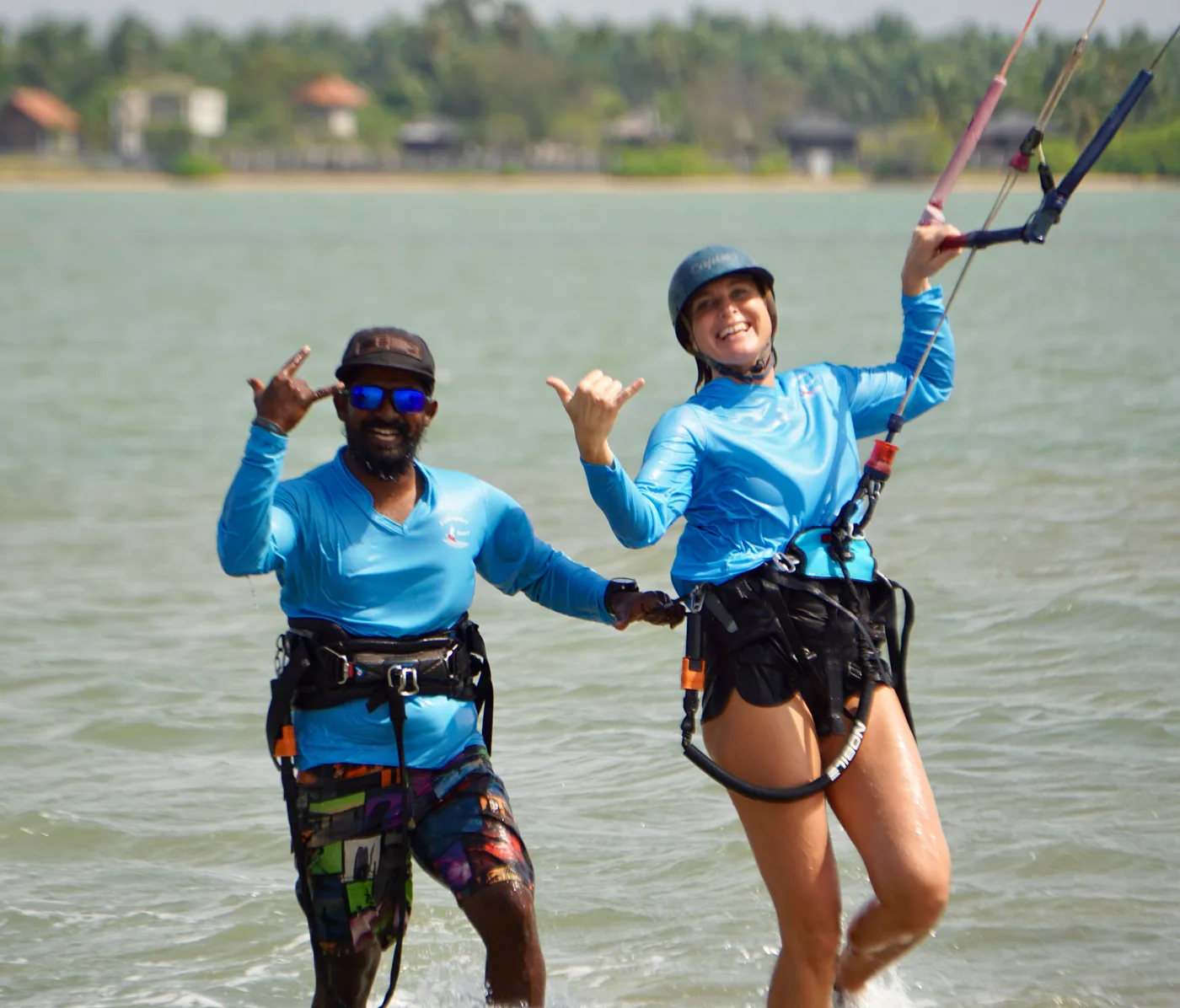
Learning together is one of the best ways to do it. You can share semi-private lessons, rotate on the gear and rest while the other rides, which turns out to be a natural way to pace a full day without burning out.
People rarely progress at exactly the same speed, and that is fine. We adapt so neither of you is held back or left behind, and there is always the pool, restaurant and lagoon for the hours you are not on the water together. Evenings here are made for it.
See the couples package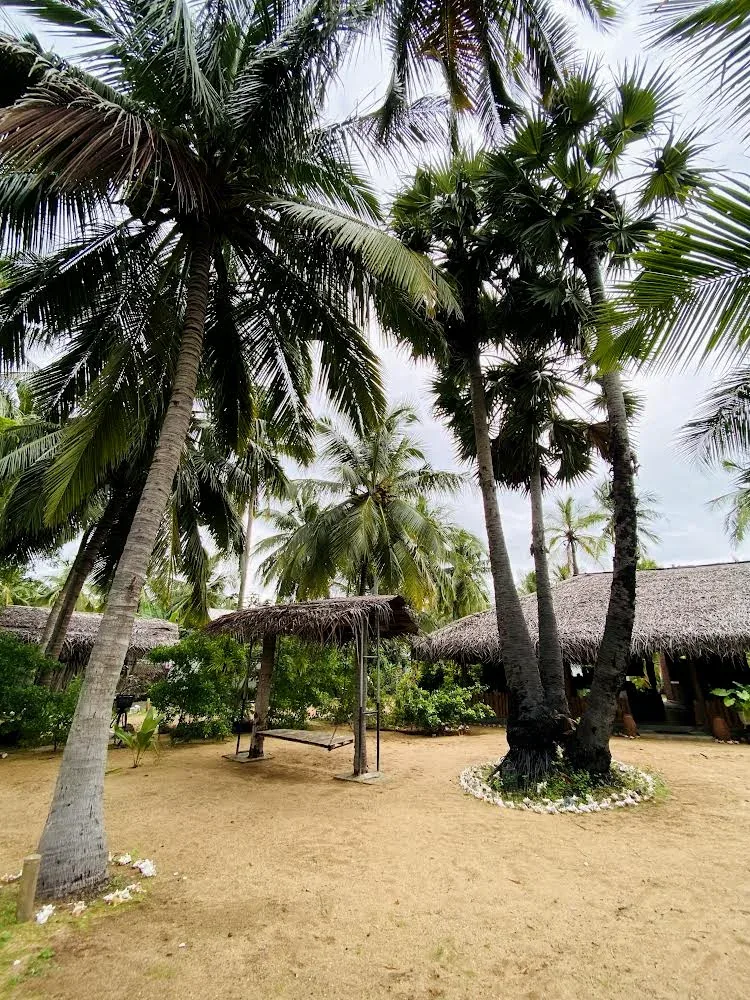
Non-kiting partners
They will have a better time than you might think. While you are on the water, the resort has a pool, a restaurant, gardens and quiet corners to read or work. Beyond the base, Kalpitiya offers lagoon boat trips, dolphin watching in season, birdlife and long empty beaches.
We can put together a non-kiter package so your partner has a proper holiday rather than a waiting room, and your evenings are shared. Plenty of couples arrive with one kiter and leave with two.
Non-kiting partner packageWhen the wind drops
Kalpitiya is one of the windiest places in Asia in season, but no honest school promises wind every single day. When it drops below a usable level, we do not teach in unsafe or pointless conditions. Instead we reschedule your hours within your stay wherever we can. This is exactly why booking a few extra days matters.
A light day is rarely a wasted day here. You can take a lagoon or island boat trip, relax by the pool, explore the peninsula, or use the time for a land-based kite-control session. Unused prepaid lesson hours are handled fairly. Ask us for the current policy when you book.
Read the season guide
Questions
For the peak summer season (June to August) we recommend booking a few weeks to a couple of months ahead, especially if you want specific dates or a particular room. Off-peak and last-minute stays are often possible. Just message us and ask.
Yes, we strongly recommend it, and it should cover watersports. Kitesurfing is low-risk when taught properly, but insurance that covers medical care and cancellation gives you peace of mind for the whole trip.
Yes. We can arrange a private transfer from Colombo (CMB) airport to Kalpitiya, roughly a three to four hour drive. Send us your flight details and we will quote it and book the driver for you.
As a rough guide, a week that covers a beginner course, accommodation, meals and transfers usually lands somewhere between a mid-range and comfortable range depending on your room and lesson choices. We give you a full itemised price before you commit.
Send your rough dates, group and experience level. We will suggest how many days you need, a course, a room and a full price.
Start planning on WhatsApp