
A rescue boat on the water
On lessons and courses a support boat is on hand, so help is never far away if you drift or need a lift back upwind.
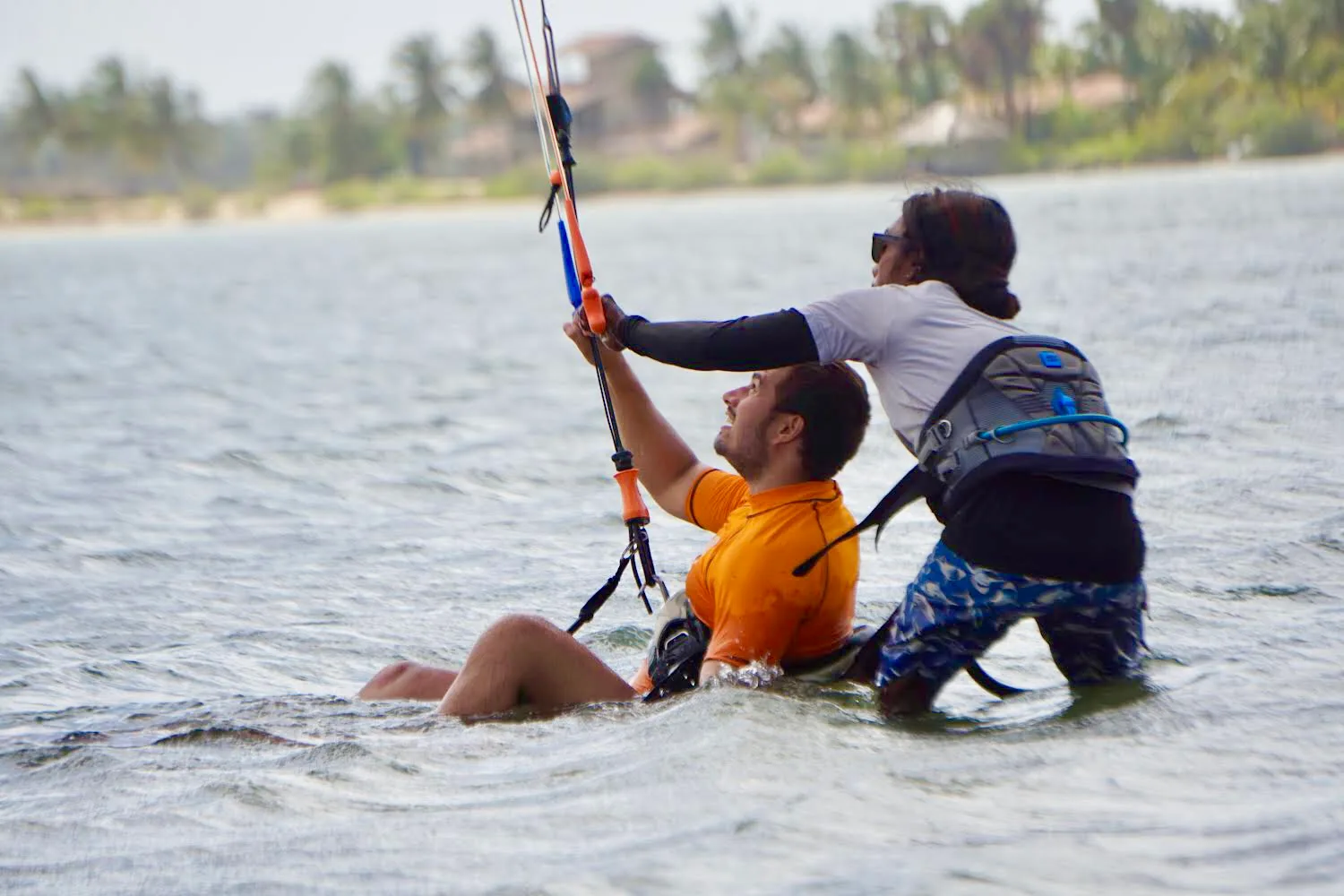
The honest answer: taught properly, in the right water, it is far safer than it looks.
Kitesurfing has a reputation for being extreme, and it is easy to see why from the beach. But most of that reputation dates from an earlier era of the sport. Today's equipment, teaching methods and safety systems have changed the picture completely, and for a beginner learning in the right conditions, the real risks are small and well managed.
The key idea is simple: almost every serious incident traces back to the wrong conditions, faulty gear or skipping the basics. A structured course removes all three. Here is how a properly run beginner lesson keeps you safe.
Six layers of safety
On lessons and courses a support boat is on hand, so help is never far away if you drift or need a lift back upwind.
You wear a helmet with a two-way radio, so your instructor talks you through every move in real time from the beach or the boat.
You learn in waist-to-chest-deep water you can stand up in. No waves to fight, no deep water to fear.
Today's kites depower and release in an instant. Learning to use these systems is part of your very first lesson.
Your coach is trained to an international standard to teach safety and progression in the right order.
If conditions are gusty, too strong or unpredictable, we wait. No lesson is worth an unsafe session.
The spot matters as much as the school. Kalpitiya Lagoon gives beginners a rare combination: water shallow enough to stand up in across a huge area, steady seasonal wind rather than sharp gusts, and open space well away from rocks, piers and crowds. When you fall — and everyone falls while learning — you simply stand up and try again. That single fact takes most of the fear out of the process.
Learn more about why Kalpitiya suits beginners, or read about our safety and rescue setup.
Safety questions
Kitesurfing carries risk like any board or water sport, but taught properly it is far safer than its reputation. The large majority of incidents come from riding in the wrong conditions, using faulty gear or skipping the safety fundamentals, all things structured lessons are designed to prevent. Modern kites, quick-release systems and shallow-water teaching have made beginner learning genuinely low-risk.
The most common beginner issues are sunburn, minor knocks and tiredness, not dramatic accidents. Serious risk comes from being overpowered in strong wind or launching near hazards, which is exactly why beginners learn in controlled, flat water with a coach managing the conditions.
Yes. For lessons we provide a helmet with radio communication and a harness, and teach you how the kite's safety release works before you ever ride. A buoyancy aid is available if you would like one.
You are taught self-rescue early: how to safely depower your kite and get yourself back to shore. On top of that, the rescue boat and your radio link mean you are never truly on your own during a lesson.
Safety questions are welcome. They are the sign of a smart beginner. Message us and we will talk you through exactly how your first lesson works.
Ask about safety